Summerhouse Delivery and Installation Checklist
Written by Matt W on 8th Aug 2026.
Confirm road and route access
Finish and verify the base
Check packages and damage
Treat, ventilate and inspect
Successful summerhouse installation starts before the vehicle leaves the depot. Confirm vehicle access, unloading terms, the road-to-base route and safe component storage. Complete the exact base early, then verify dimensions, level and diagonals. On arrival, check packages and report damage promptly. Keep instructions, fixings and treatment requirements available throughout assembly.
Key takeaways
- Some large cabins arrive on 26-tonne HIAB vehicles.
- Kerbside delivery does not include moving parts into the garden.
- Measure gates, turns, heights and the narrowest route point.
- Verify the base dimensions, level and diagonals before dispatch.
- Photograph packaging and damage before moving affected components.
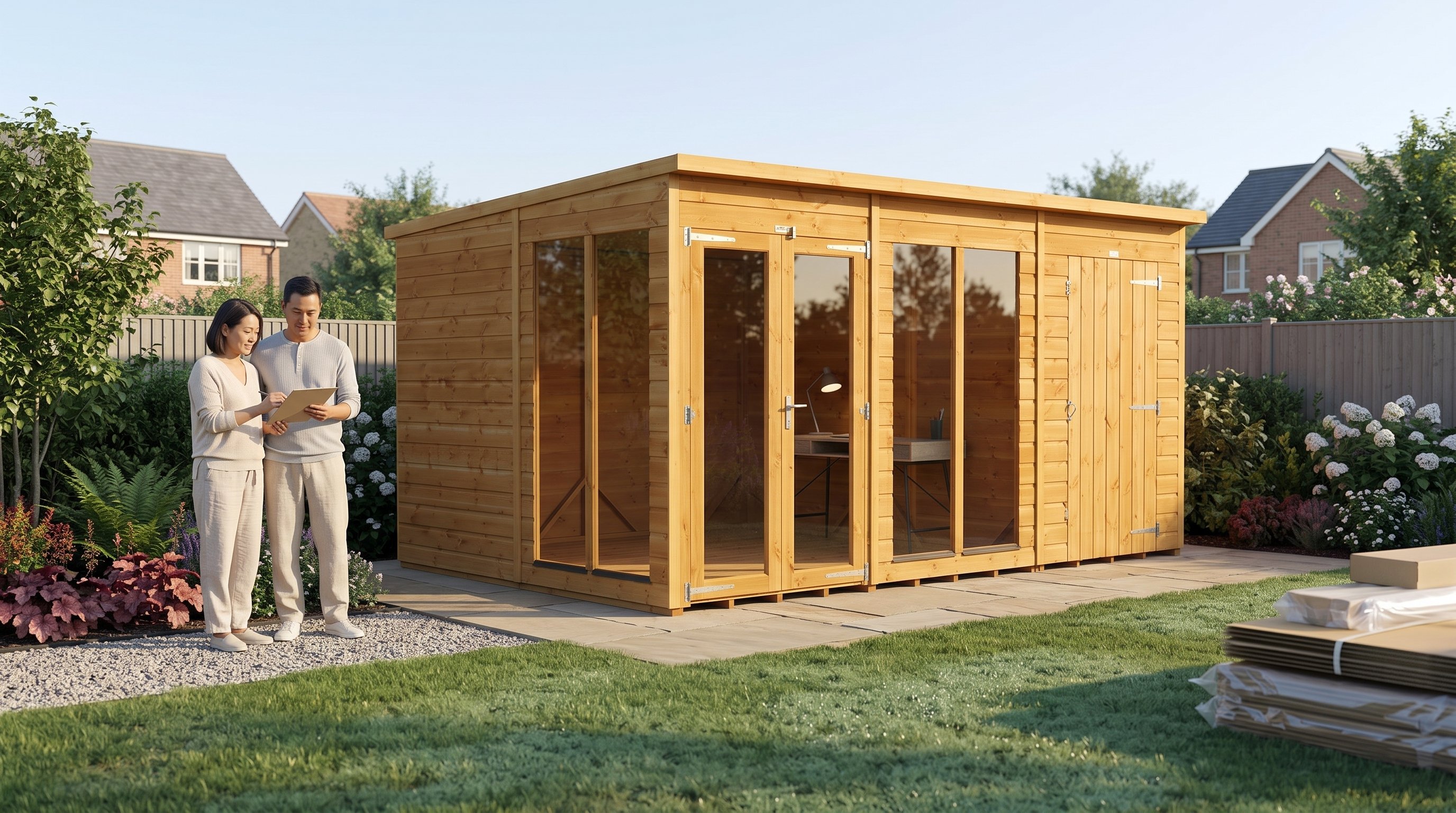
View the Power 12x8 Pent Summerhouse Combi | £1,887
Choose a summerhouse and check its delivery details
By Matt W | Summerhouse Stores
Updated 8 August 2026
Most delivery problems are predictable. Vehicle size, narrow access, unfinished bases and missing storage plans can all be checked early.
What should you check before ordering?
Confirm the exact product dimensions, package format, delivery estimate and unloading terms. Ask what happens when the vehicle cannot reach you.
Read the base specification before choosing an installation date. Groundworks need enough time for completion, checking and any required curing.
Identify who will move components from the unloading point. Kerbside delivery can leave that responsibility with the customer.
Decide whether the supplier, an independent installer or your own team will assemble the building. Check warranty conditions before appointing anyone.

View the Power 8x6 Pent Summerhouse | £896
How do you check delivery vehicle access?
Start at the approach roads, not the garden gate. Check width, weight restrictions, tight bends, parked cars and turning space.
Look for low branches, cables and weak verges. Confirm whether the vehicle needs to stop, turn or deploy stabilising equipment.
Power log cabins can arrive on a 26-tonne HIAB vehicle with a crane behind the cab. Delivery is kerbside, subject to access.
Power summerhouses may use an 18-tonne or 26-tonne vehicle. Tell the supplier about restrictions before dispatch.
How do you measure the road-to-base route?
Measure every gate, passage and doorway at its narrowest usable point. Include hinges, handles, drainpipes and wall projections.
Check corners using the longest expected component, not a person. Long panels and logs need space to pivot through bends.
Record steps, slopes, gravel and soft ground. Heavy glazed panels need safe handling teams and clear resting areas.
Measure overhead clearance beneath arches, branches, cables and porch roofs. Photograph every constraint and share it with the delivery team.
Matt's pick: Palmako Vivian 3 x 2.4m Log Cabin
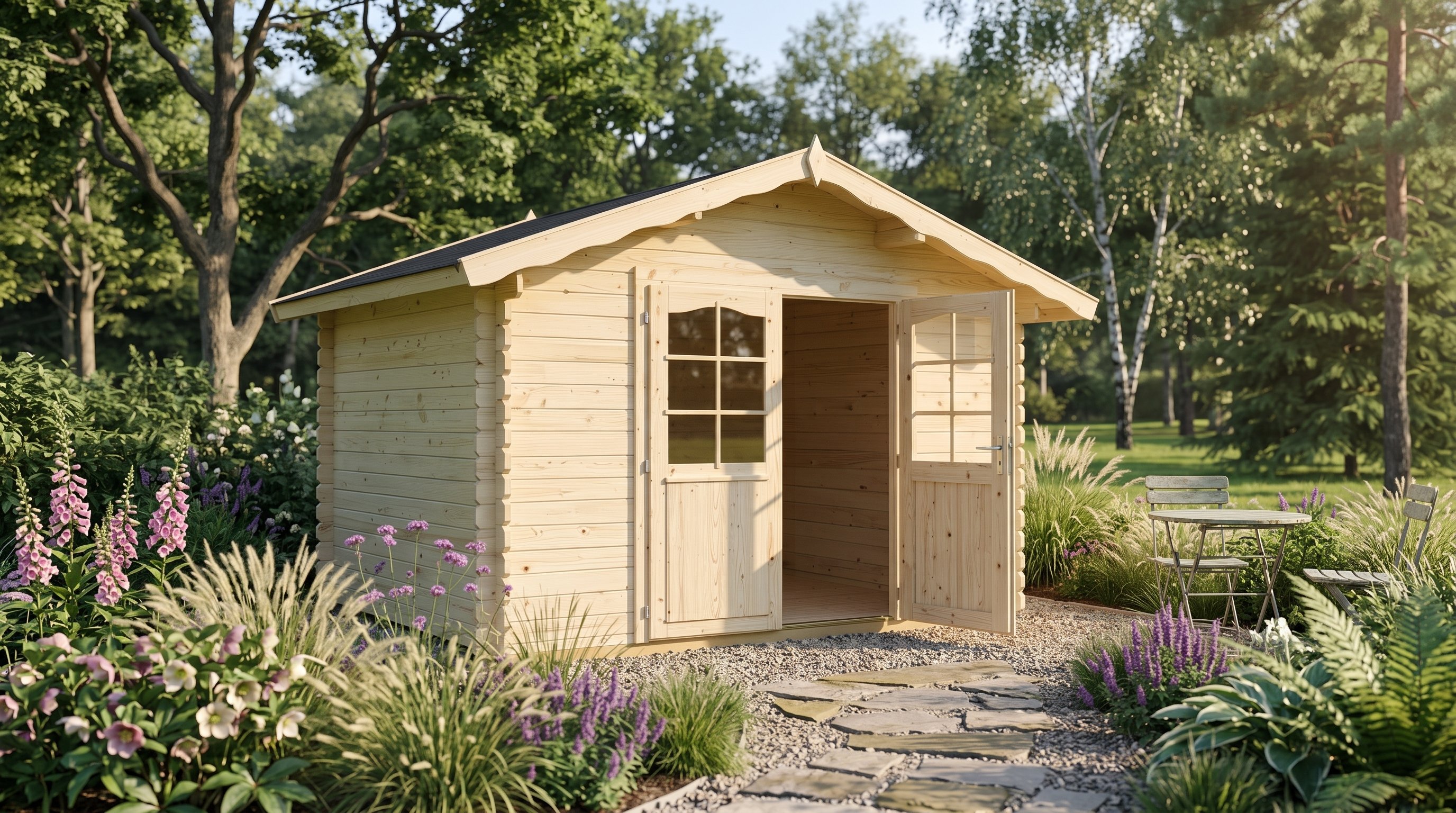
View the Palmako Vivian 3 x 2.4m Log Cabin | £2,490
The packed cabin measures about 3.2m by 1.2m by 0.7m and weighs about 625kg. Its expected delivery is four to six weeks.
When should the base be ready?
Finish the base before the confirmed delivery and installation dates. Allow any concrete to cure according to the contractor's specification.
Check the exact width, depth and finished level. Measure both diagonals to confirm a rectangular base is square.
Clear soil, materials and vegetation around the working zone. Installers need safe access around walls and roof edges.
Our base guide explains concrete, paving, plastic grids, timber frames and ground screws.

View the Power 6x4 Apex Summerhouse | £688
What should you prepare one week before delivery?
Reconfirm the address, contact number, access notes and unloading point. Check whether the supplier provides a date, time window or separate booking call.
Palmako transport usually contacts customers five to seven days before delivery. Power summerhouse timing can be three to five working days.
Lead times vary by product and can change. Use the current product page and booking message rather than this example alone.
Arrange enough capable help for permitted handling. Prepare a dry, flat and secure storage area if assembly will not start immediately.
Keep children and pets away from the unloading route. Move vehicles, planters, bins and fragile garden items beforehand.
What should you do when the building arrives?
Follow the driver's safety instructions and remain outside the unloading zone. Do not stand beneath suspended loads or near deployed stabilisers.
Check the package count against the delivery paperwork. Inspect visible wrapping, corners, glazing and long components before moving them.
Photograph damage and labels clearly. Note concerns on the delivery paperwork and contact the seller through the stated process promptly.
Do not open every package without an organised plan. Keep components protected, flat and grouped according to the assembly sequence.

View the Power 6x6 Corner Summerhouse | £909
How should you organise installation day?
Keep the instructions, component list, tools and correct fixings together. Read the entire sequence before lifting the first wall.
Check weather conditions and postpone unsafe roof work. Wet, icy or windy conditions increase handling and working-at-height risks.
Confirm the base again before assembly. A building should not be forced to compensate for an incorrect foundation.
Protect glazing and finished faces while components wait. Do not stack heavy logs or panels against unstable fences.
For larger cabins, allow for log settlement and manufacturer-specific fixings. Never pin interlocking walls where movement is expected.
What should you inspect before handover?
Open every door and window. Check even gaps, locks, glazing, seals, trims, floor boards and the complete roof covering.
Confirm water can leave the roof safely. Check gutter falls, outlets and discharge points when guttering forms part of the project.
Collect instructions, keys, spare components, treatment details and warranty records. Photograph the finished building and any agreed outstanding work.
Plan internal furniture using our summerhouse sizing guide before blocking windows or vents.
What needs doing after installation?
Apply required timber treatment within the stated timescale. Some cabin warranties require immediate treatment with a suitable wood preserver.
Ventilate the empty building and watch for water entry after the first heavy rain. Recheck doors as timber acclimatises.
Arrange qualified electrical work only after agreeing suitable cable routes and wall movement details. Do not conceal unapproved cables inside timber construction.
| Stage | Essential check | Evidence to keep |
|---|---|---|
| Before order | Vehicle, route and base requirements | Product details and measurements |
| Before dispatch | Base level, square and complete | Photos and dimensions |
| On arrival | Package count and visible condition | Delivery paperwork and photos |
| During assembly | Instruction sequence and weather | Component list |
| At handover | Doors, glazing, roof and drainage | Signed snag list |
| Afterwards | Treatment and first-rain inspection | Receipts and warranty record |
Review likely permissions before fixing dates. The summerhouse planning guide for England covers common height and location questions.
“A prepared base is only half the job. The vehicle, route, storage and people must line up too.”
Frequently asked questions
Does delivery include carrying panels into my garden?
Not necessarily, because many deliveries are kerbside. Check the exact unloading terms and arrange handling help beforehand.
Can delivery happen before the base is finished?
Yes, if dry, secure and suitable storage is available. However, delayed assembly increases handling and weather-exposure risks.
How level must a summerhouse base be?
It must meet the manufacturer's requirements across the complete footprint. Correct every high, low or unstable point before assembly.
Should I unpack everything immediately?
No, first check labels, instructions and package counts. Keep components protected and unpack them in a controlled sequence.
What if a component arrives damaged?
Photograph it, note the delivery condition and contact the seller promptly. Follow the supplied reporting process before assembly.