Summerhouse vs Log Cabin vs Garden Room
Written by Matt W on 8th Aug 2026.
Seasonal leisure and hobbies
Heavier timber and flexible use
Insulated, frequent all-year use
Match the shell to occupancy
Choose a summerhouse for seasonal leisure. Pick a log cabin for a stronger timber room, or an insulated garden room for year-round use. The labels overlap, so compare the actual wall, roof, floor, glazing and insulation specifications. Your expected winter occupancy should drive the choice more than appearance or price alone.
Key takeaways
- Summerhouses commonly use framed 12mm timber panels for seasonal use.
- Log cabins use interlocking logs, often 28mm or 44mm thick.
- Insulated garden rooms suit regular winter work and controlled heating.
- Base, electrics and delivery can materially change the final budget.
- Compare exact specifications because product labels are not regulated categories.
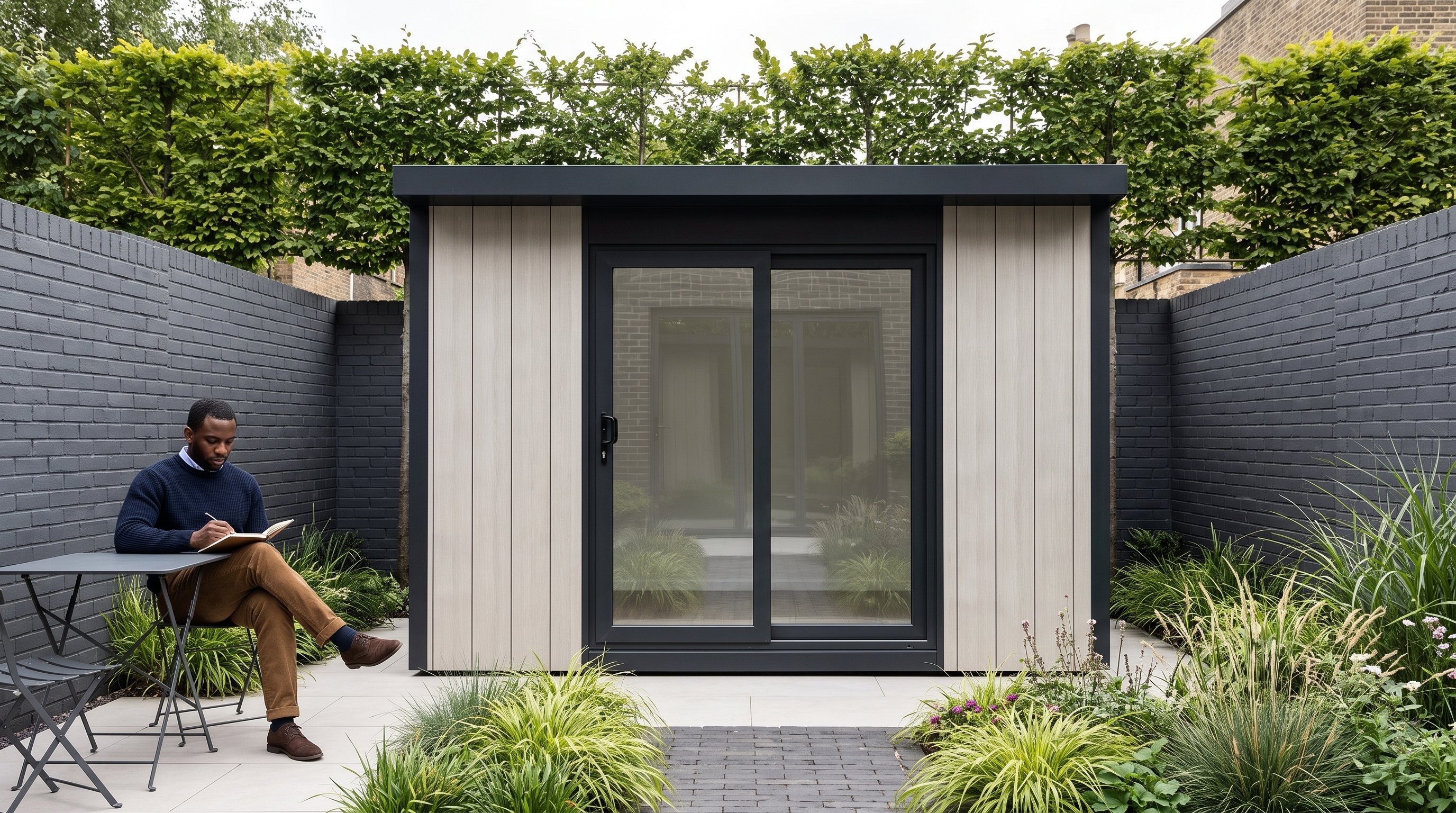
View the Calmpod 12x8 Insulated Garden Building | £11,500
By Matt W | Summerhouse Stores
Updated 8 August 2026
These three names describe different construction approaches, but sellers do not always use them consistently. Specifications provide a fairer comparison than category labels.
What is the difference between the three building types?
A summerhouse is usually a glazed, framed timber building for leisure. A log cabin uses interlocking wall logs. A garden room usually adds insulation.
Summerhouses often arrive as pre-made wall panels. Log cabins arrive as individual logs, which lock together course by course.
Insulated garden rooms vary considerably. Check whether insulation covers the walls, roof and floor, then inspect doors and windows.
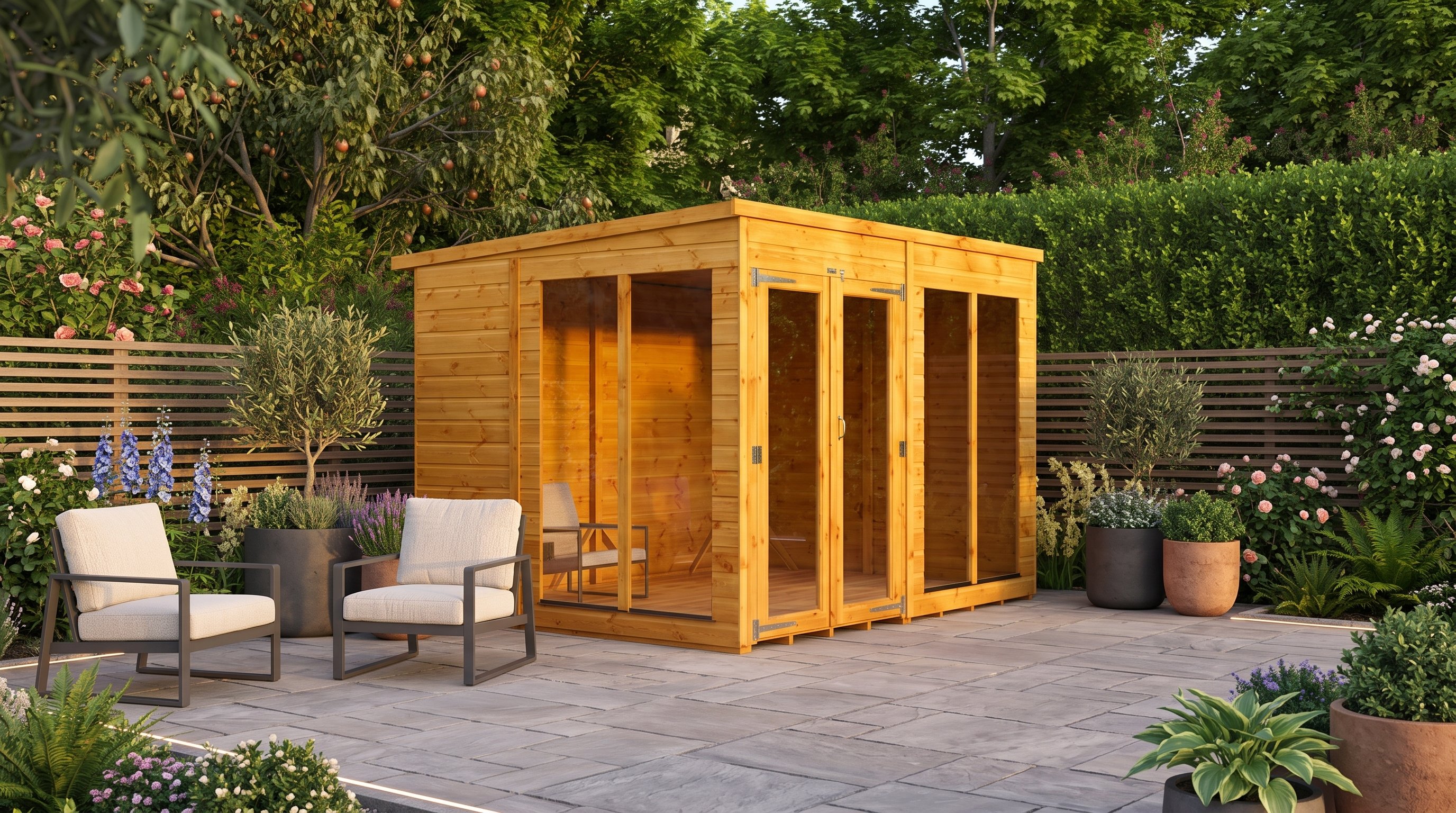
View the Power 8x6 Pent Summerhouse | £896
Which option is best for seasonal leisure?
A timber summerhouse is usually the best-value choice for spring, summer and mild autumn use. Large windows create a bright garden retreat.
It works well for reading, crafts, relaxed dining and sheltered seating. Occasional chilly days can be managed with sensible ventilation and temporary heating.
The summerhouse buying guide explains the key choices around size, glazing, roofs and bases.
Matt's pick: Power 6x4 Apex Summerhouse
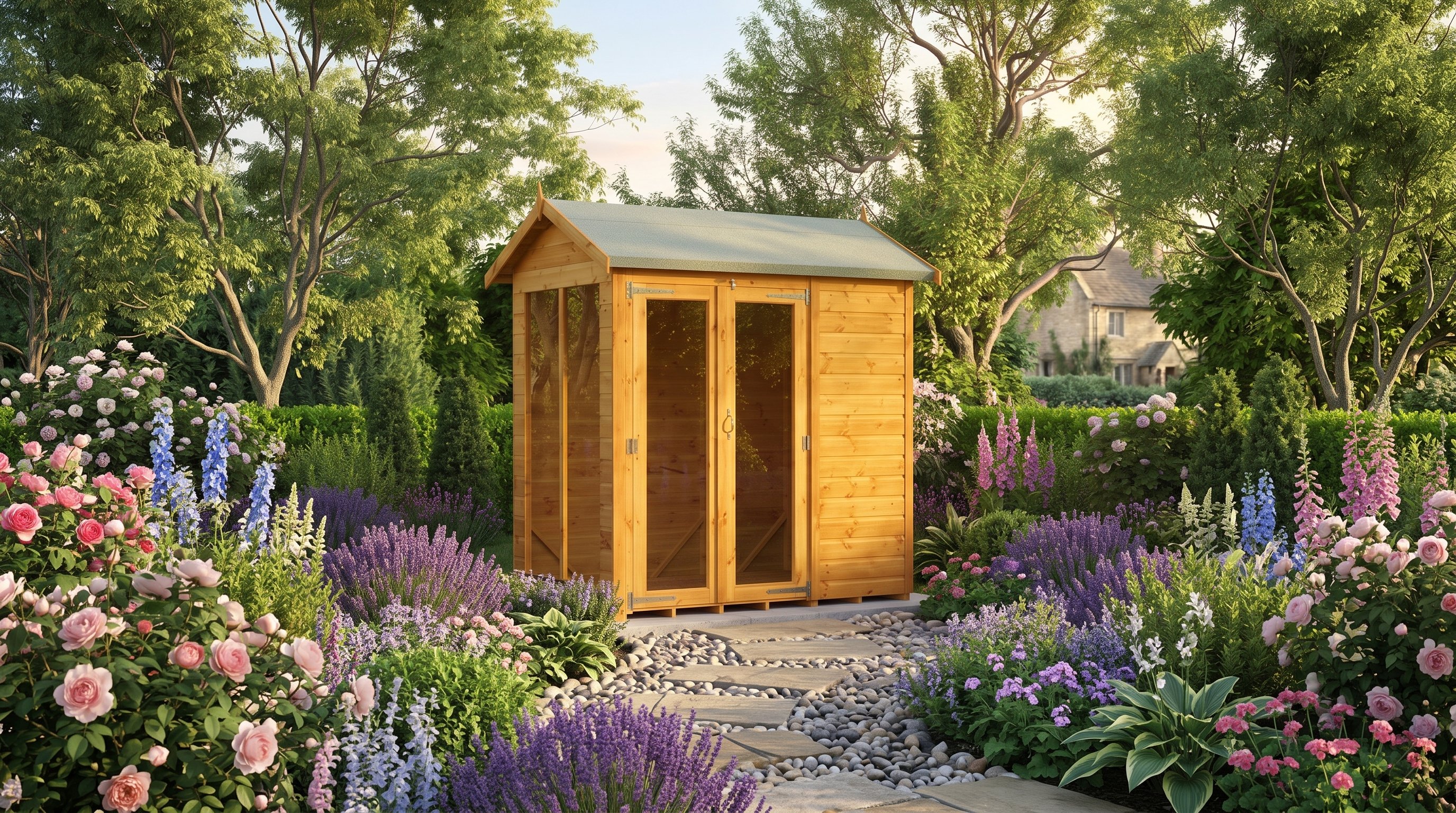
View the Power 6x4 Apex Summerhouse | £688
The 1190mm by 1878mm base suits compact plots. Walls, roof and floor use 12mm tongue-and-groove timber.
When does a log cabin make more sense?
A log cabin makes sense when you want heavier timber walls and a larger, more substantial room. Interlocking logs create a rigid shell.
Common wall options include 28mm and 44mm logs. Thickness affects rigidity and heat retention, but it does not replace insulation.
The Palmako Vivian uses 28mm walls with 19mm roof and floor boards. Its 3.0m by 2.4m base provides 6.9m².
A larger Power 44mm cabin uses 44mm interlocking logs, 19mm roof and floor boards, and 58mm by 44mm bearers.
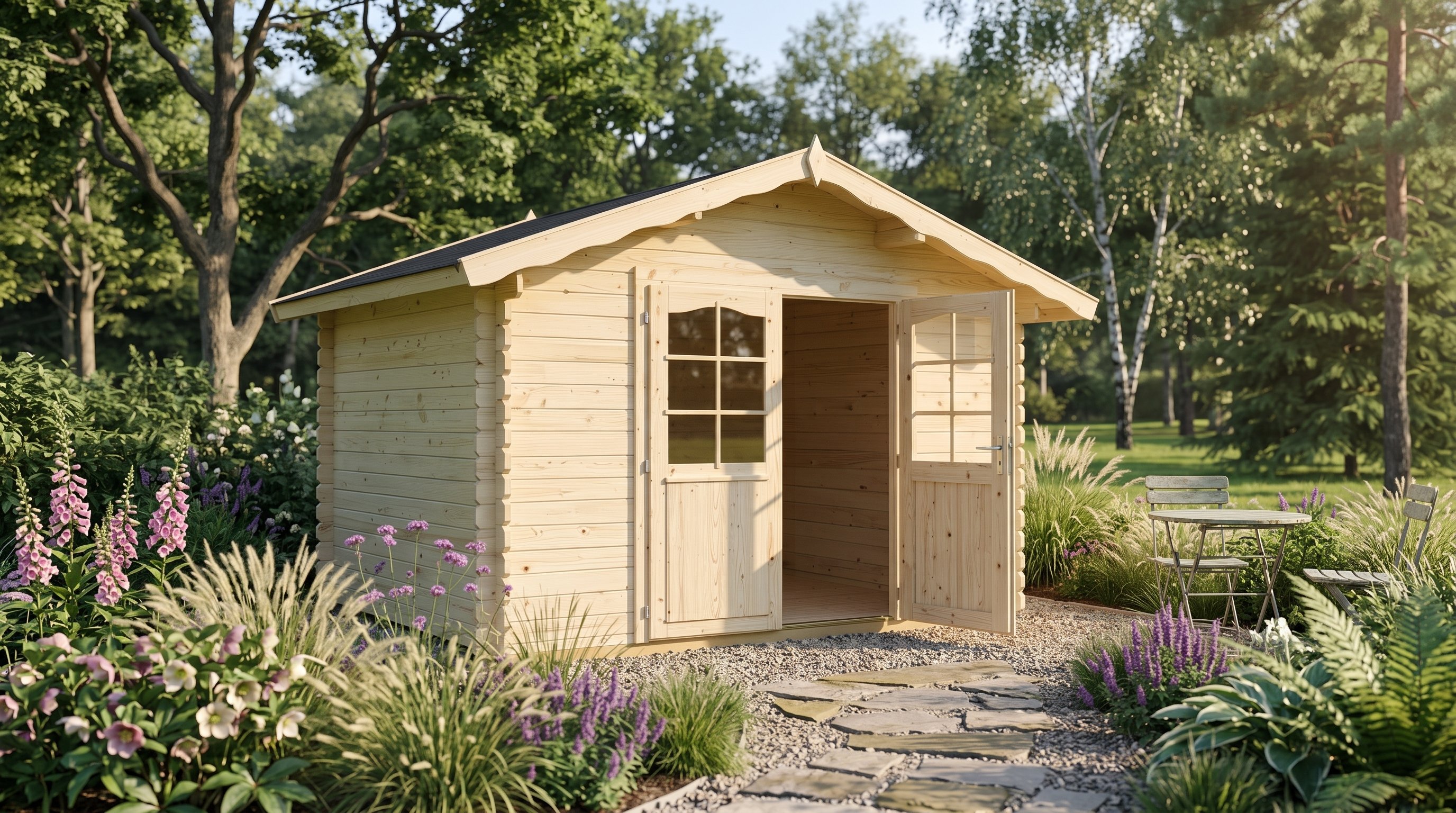
View the Palmako Vivian 3 x 2.4m Log Cabin | £2,490
When is an insulated garden room worth it?
An insulated garden room is worth considering for regular winter work, study or exercise. It should hold heat better than an uninsulated shell.
Ask for the complete build-up, not one headline wall figure. Doors, glazing, floor edges and roof junctions can become weak points.
The Calmpod range combines 94mm walls, an 81mm roof, EcoQuilt insulation and uPVC doors. That specification targets more frequent use.
For working layouts, read our all-year garden office guide before choosing services.
How do cost and comfort compare?
Purchase price usually rises from seasonal summerhouse to log cabin, then insulated garden room. Size and specification can reverse that order.
| Factor | Summerhouse | Log cabin | Insulated garden room |
|---|---|---|---|
| Typical role | Seasonal leisure | Flexible substantial room | Frequent all-year room |
| Wall approach | Framed timber panels | Interlocking logs | Insulated layered system |
| Common examples | 12mm shiplap | 28mm or 44mm logs | Insulated wall, roof and floor |
| Winter comfort | Limited without upgrades | Better mass, still uninsulated | Best starting point |
| Assembly | Panel based | Log by log | Supplier dependent |
| Maintenance | Regular timber treatment | Regular timber treatment | Finish dependent |
Budget beyond the building. A suitable base, electrical work, assembly, treatment, guttering, furnishings and access solutions may all add cost.
Our 2026 summerhouse cost guide separates these items before you compare totals.
Do planning rules differ?
Planning rules depend on dimensions, position, land and intended use. Calling something a garden room does not create a separate automatic exemption.
Height near a boundary often determines the practical design. Sleeping accommodation and self-contained residential use need much closer scrutiny.
Check the current national rules and local constraints before ordering. Listed buildings, designated land and previous permissions can change the position.
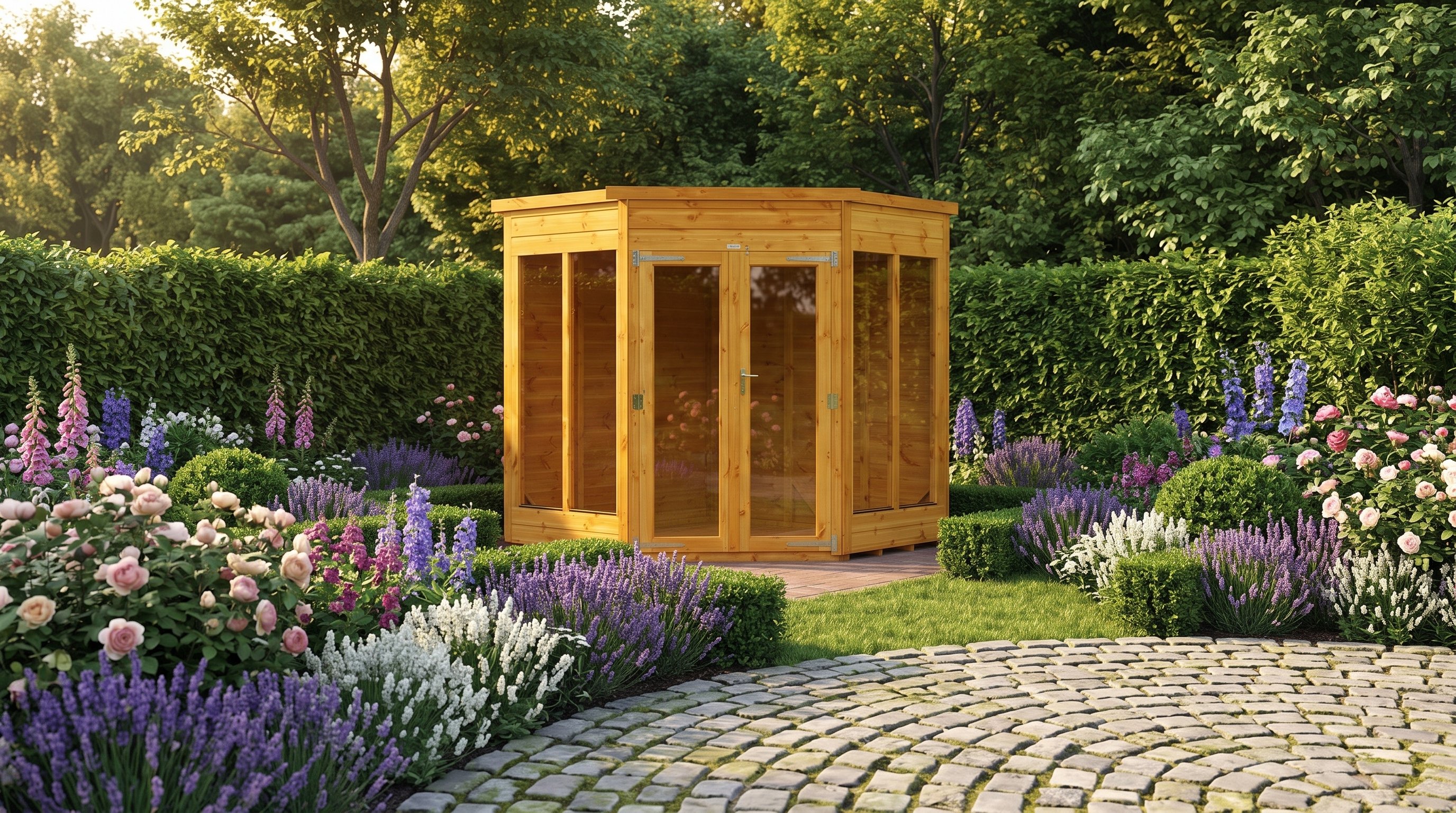
View the Power 6x6 Corner Summerhouse | £909
Which building needs the most maintenance?
Exposed timber buildings need regular inspection and treatment. Larger log cabins have more timber area, while garden-room finishes vary.
Keep walls clear of vegetation and standing water. Check roof edges, seals, gutters and lower boards after severe weather.
Interlocking logs move slightly as moisture changes. Follow the manufacturer’s guidance around fixings, settlement gaps and wall-mounted items.
Which one should you buy?
Buy the least complicated building that comfortably supports the intended use. Seasonal leisure rarely needs an office-grade insulated room.
Choose a log cabin when wall strength, scale and a timber interior matter. Choose insulation when weekly winter occupancy matters more.
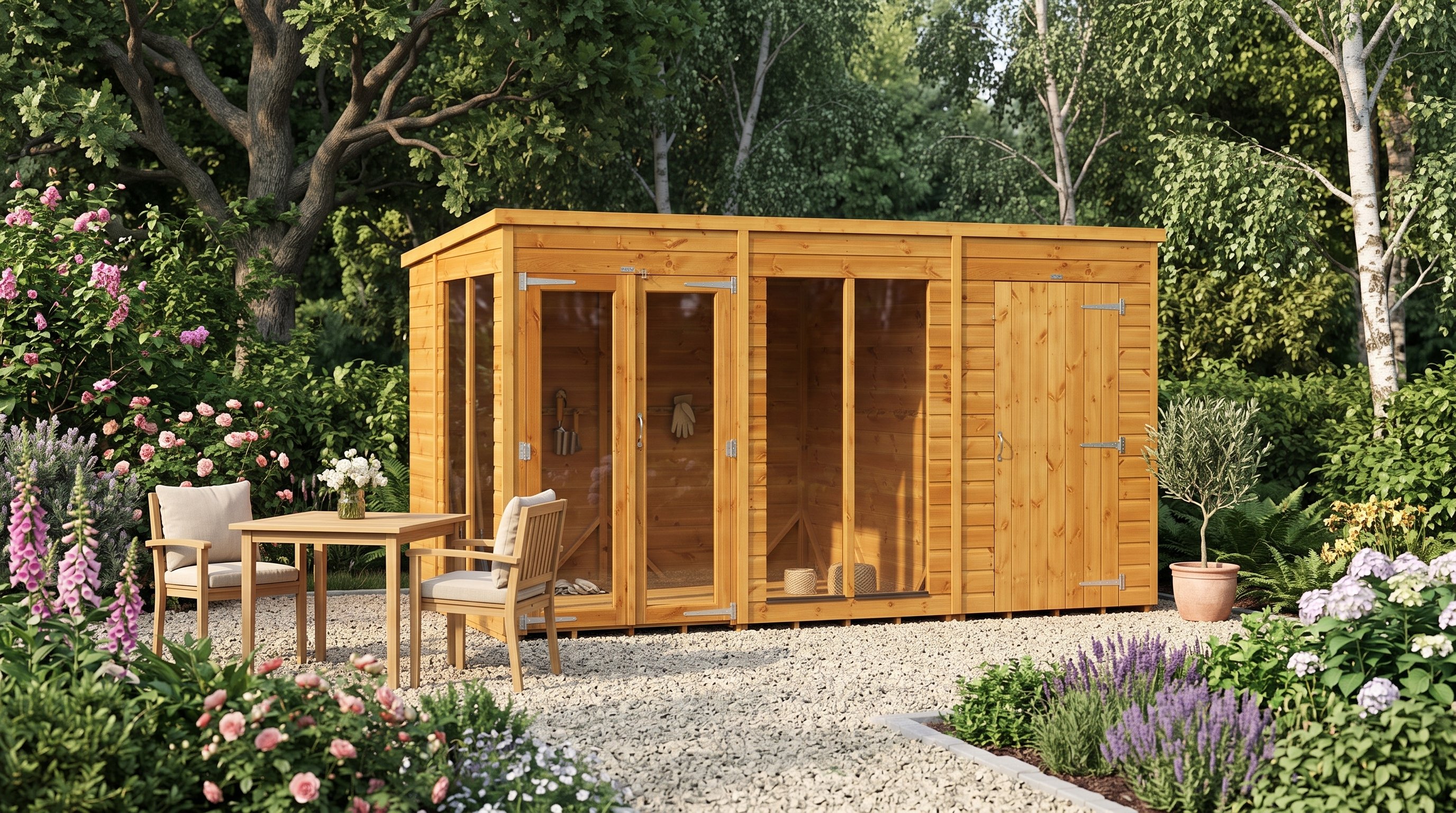
View the Power 12x6 Pent Summerhouse Combi | £1,602
“A product name cannot tell you how the room will feel in January. The full build specification can.”
Frequently asked questions
Is a log cabin warmer than a summerhouse?
Usually, thicker logs retain heat better than thin framed panels. Neither matches a properly insulated room by default.
Can a summerhouse become a home office?
Yes, if space, insulation, ventilation, power and security match regular working needs. Occasional summer work needs fewer upgrades.
Is a garden room the same as a log cabin?
No, although some sellers use the terms loosely. Garden rooms usually emphasise insulation, while cabins use interlocking logs.
Which option has the lowest starting cost?
A compact seasonal summerhouse usually has the lowest starting cost. Compare the installed total, not only the building price.
Do all three need a prepared base?
Yes, every permanent garden building needs a firm, level and suitable base. The required design depends on weight and ground.